Projects
New Craigmont Copper Project
Quick Facts
Ownership
100%
Location
Near Merritt, BC, Canada
Status
Exploration
Operation
Past-Producing Underground and Open Pit Copper Mine with Ongoing Exploration
Commodity
Copper (Primary), with potential for Molybdenum and Magnetite


Project Overview
Location
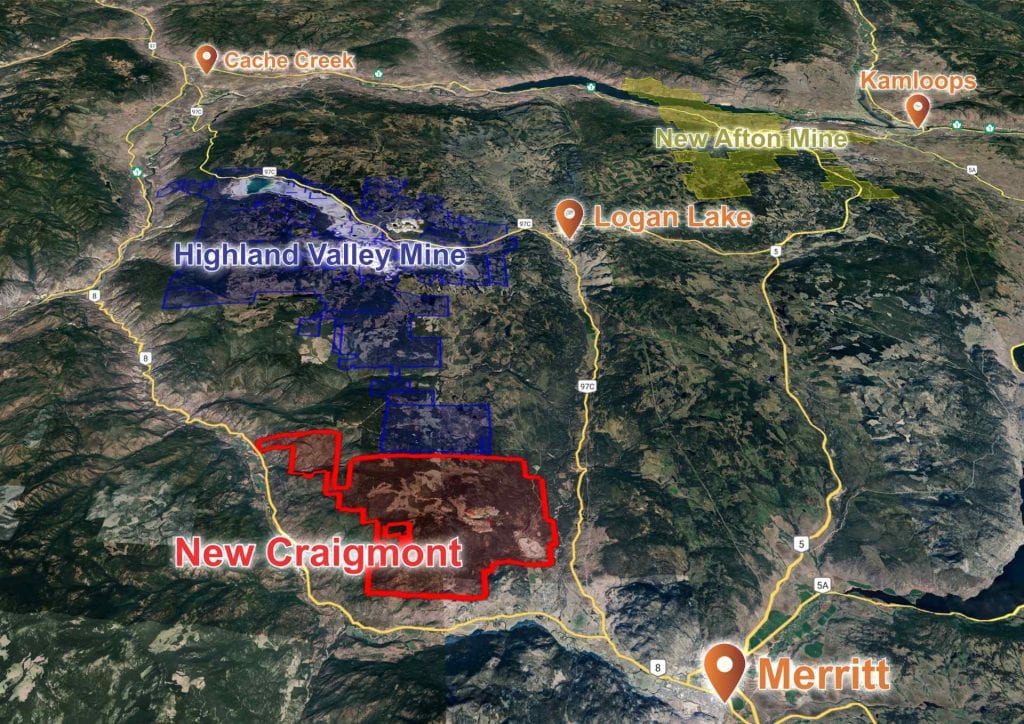
Located 14 km northwest of Merritt and 190 km northeast of Vancouver, the New Craigmont property is easily accessed via paved roads from Vancouver, Kamloops, and Kelowna, and is serviced by hydroelectric power (Figure 1).
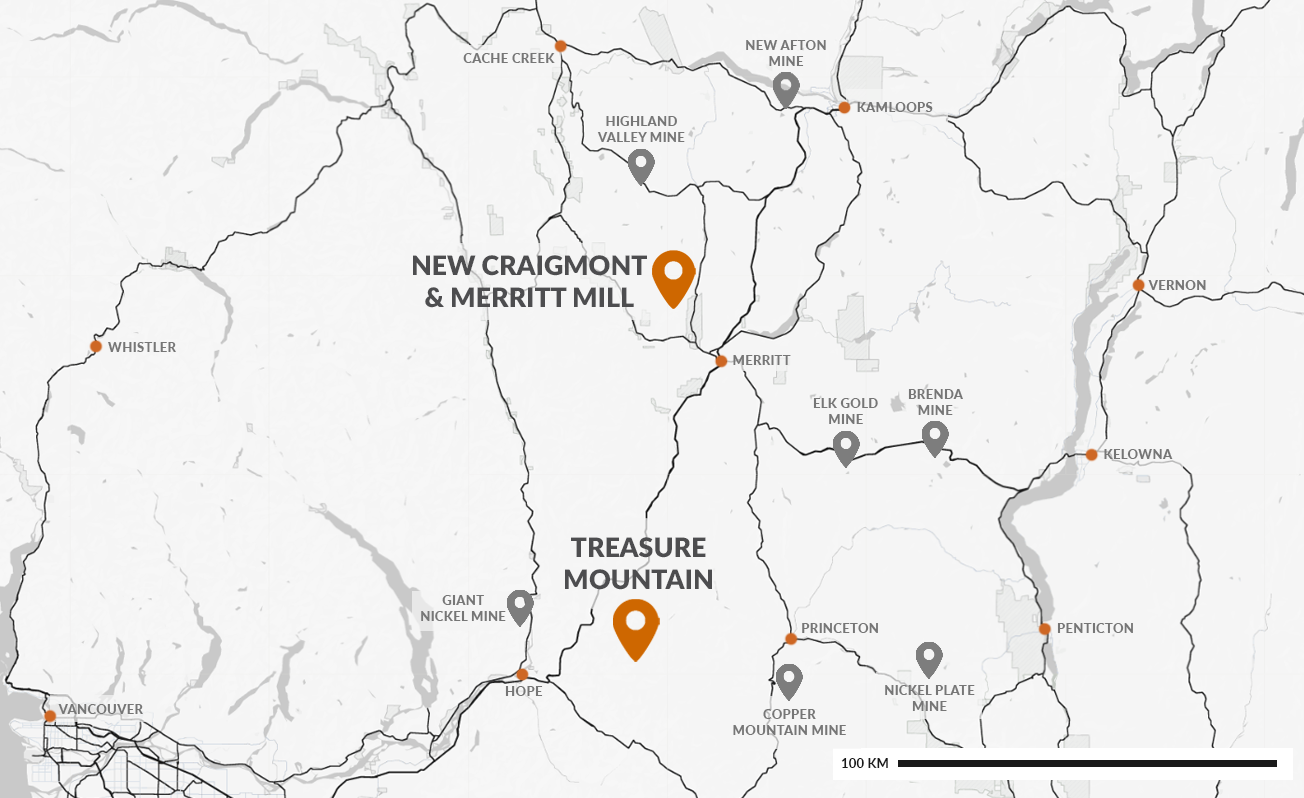
The Craigmont Property is composed of 10 mineral leases and 22 mineral claims covering an area of over 10,800 ha. Access is by a 14 km paved road from the city of Merritt, BC. The property’s excellent infrastructure, comprising maintained dirt roads, as well as numerous tracks, allows for easy access to all areas of the property. The Merritt Mill is located on the property and benefits from connection to the BC power grid.
Geological Setting
The New Craigmont Property is located on the eastern margin of the prolific Quesnel Trough island-arc terrane, which hosts a significant number of BC’s major copper districts (Figure 4).
The Upper Triassic volcanic and sedimentary rocks of the Nicola Group are laterally the most extensive group in the Property. These are intruded by Upper Triassic – Lower Jurassic batholiths, of which the Guichon Creek batholith and Iron Mask batholith are the most important from a metallogenic perspective. These batholiths host world-class porphyry deposits, namely Teck’s Highland Valley Copper Operations and New Gold’s New Afton Mine. Lower-Middle Jurassic sedimentary rocks occur more distal to these batholiths. A Late Cretaceous volcanic belt (Spences Bridge Group) predominates the west of the property. This belt is known to contain epithermal-style gold mineralisation. Large N-S trending faults have considerable displacement, the most significant of which are the Guichon Creek Fault and Lornex Fault, which are east and west of the New Craigmont Property, respectively. Deposition of Eocene volcaniclastics (Princeton/Kingsvale Group) is controlled by paleotopography. More recent (Miocene to Holocene) volcanism is generally of little economic interest.
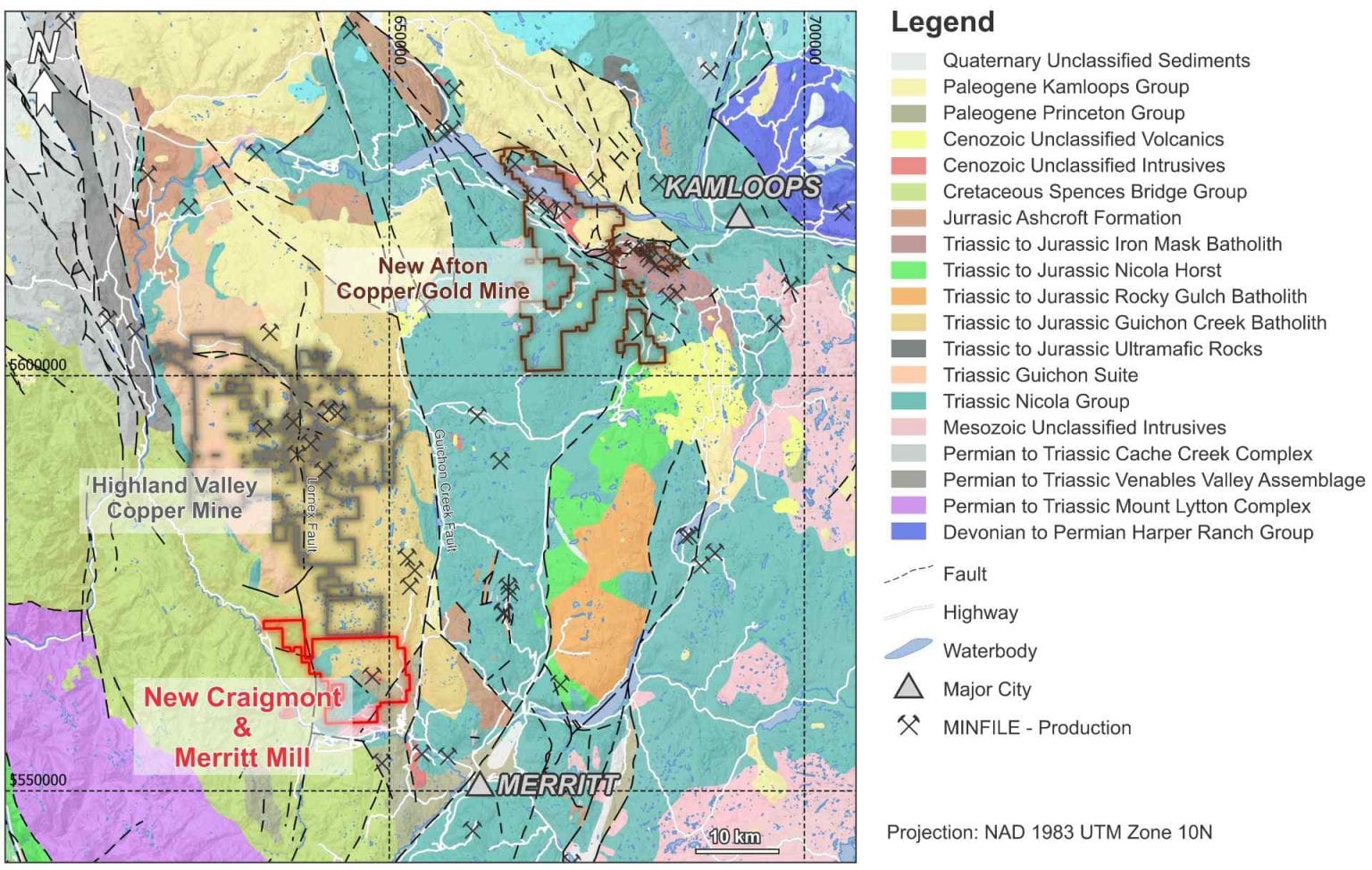
The New Craigmont Property is bound to the east and west by two large faults, the Guichon Creek Fault and Lornex Fault, respectively. Late Cretaceous volcanics (Spences Bridge Group), west of the property, are partially offset along the Lornex Fault. Eocene volcaniclastics (Princeton/Kingsvale Group) overlie the contact between the Guichon Creek batholith and southeast of the property. The historic Craigmont mine partially exploited the copper-magnetite skarn mineralisation located within the contact aureole of the Upper Triassic Guichon Creek batholith with the Upper Triassic Nicola Group volcanics.
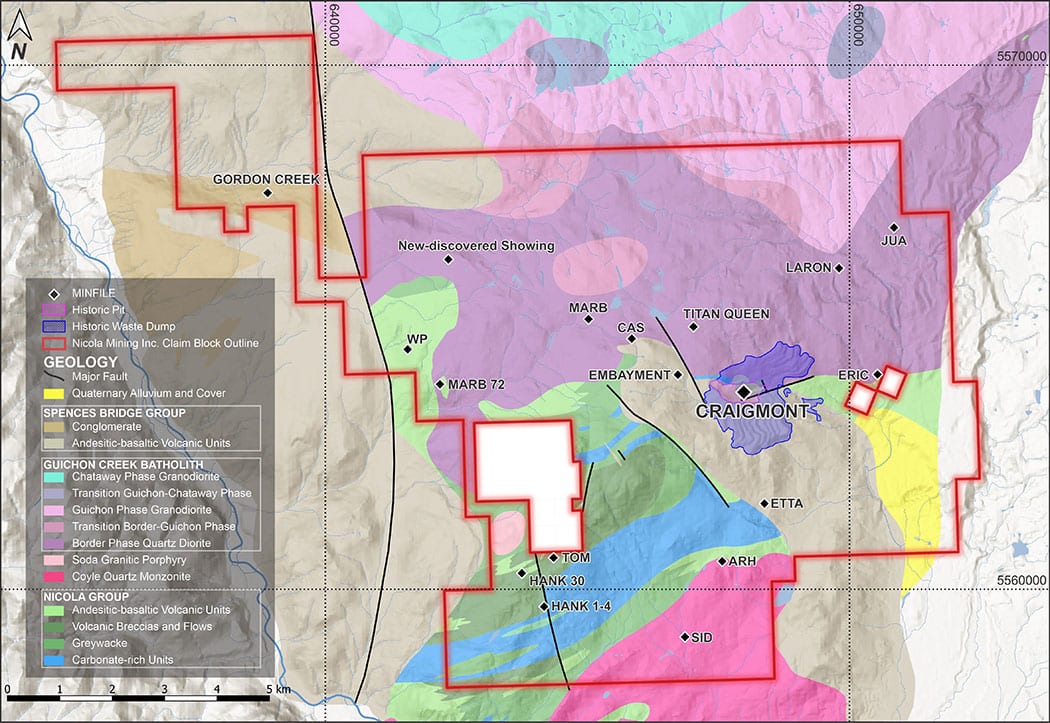
The property covers the southern contact of the Guichon Creek batholith and the Nicola Group rocks composing of volcanic clastic rocks and sedimentary rocks (Figure 4). The Craigmont skarn deposit was hosted by the Nicola Group rocks adjacent to the batholith, which is known to have produced between 33–36 million tonnes of high-grade ore.
During the mine’s production it is estimated to have recovered 887.8 million lbs of copper, 3 billion lbs of magnetite and minor amounts of gold and silver.
An additional 14 showings of copper mineralization of both skarn and porphyry-style are located on the property. Review of the historic work has indicated that these showings remain largely underexplored, with limited drilling on four of these showings (Embayment, Eric, Titan Queen and Arh).
Reconnaissance geological mapping conducted in 2016 & 2017 mapped the Guichon Creek batholith around the Titan Queen showing and Nicola Group east of the Betty Lou showing. This was the first broad reconnaissance mapping since mine closure in 1982. The most significant outcome was the identification of the extent of the hydrothermal alteration of the Guichon Creek batholith and the Nicola Group. Extensive follow-up mapping in 2023 produced a detailed geological map of the entire property. This mapping campaign identified new copper showings and identified several key areas for more detailed exploration, namely the CAS-MARB area and the WP/MARB72 area.
Ongoing Exploration
Nicola successfully consolidated the ownership of the mineral claims and leases that now form the New Craigmont Project in November 2015. Prior to this, wide-scale exploration was not undertaken due to multiple owners of the tenures covering the region. Since the consolidation the company has been actively engaged in exploration activities on the project. This extensive effort includes conducting over 18,000 m of diamond drilling, 1,869 m of reverse circulation (RC) drilling and property-wide detailed geological mapping. The company has also carried out widespread soil sampling, along with advanced geophysical surveys including induced polarization (IP), aeromagnetic surveys, and a ZTEM survey across the property (more on these geophysical surveys in the Overview section). Ongoing exploration is significantly assisted by cashflow from Nicola’s peripheral operations.
Generally, there are two exploration objectives: extending the known skarn mineralization that was historically mined, and vectoring for a (or several) porphyry copper system(s), which is believed to be the source of fluid responsible for the skarn mineralization. Geological setting, outcrop and drill core observations, as well as geophysical anomalies support the copper porphyry hypothesis. A collaborative study with UBC is ongoing to investigate the presence of a porphyry system on the property.
Furthermore, Nicola has focused on enhancing copper grades in the historic waste dumps by employing X-Ray Transmission (XRT) sorter technology. Highlighting these efforts, a technical report compliant with the National Instrument 43-101 – Standards of Disclosure for Mineral Projects was published on May 21, 2020. This report, which focuses on the historic mine waste terraces, was subsequently filed under the company’s profile on SEDAR on June 1, 2021, providing a detailed account of the exploration activities and findings. In summary, 1,869 m of RC drilling on the Southern Dumps and 3060 Portal Dumps was used to develop an inferred mineral resource of 18.7M tonnes at 0.13% copper (see NI 43-101: New Craigmont Project Technical Report). Concurrent to the inferred mineral resource, Nicola evaluated the upgrading potential of copper grades through the utilization of XRT sorter technologies (June 15, 2020 news release) and identified the potential economic contribution from magnetite at low grades (February 19, 2019 news release).
Geophysical Surveys
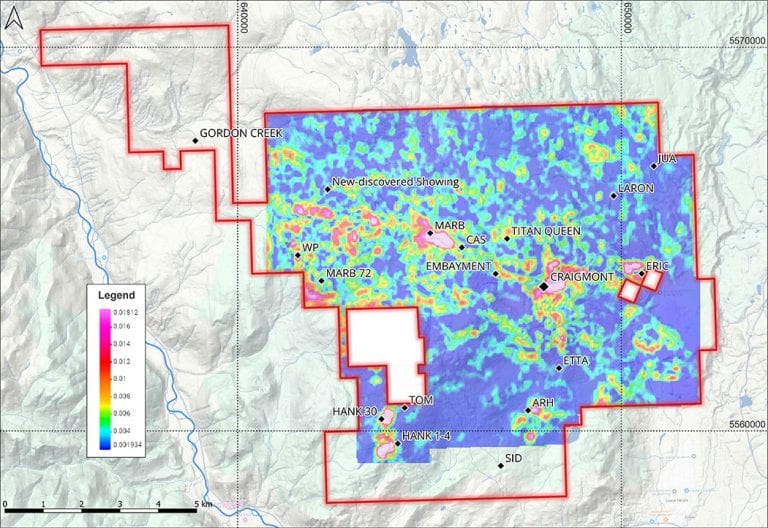
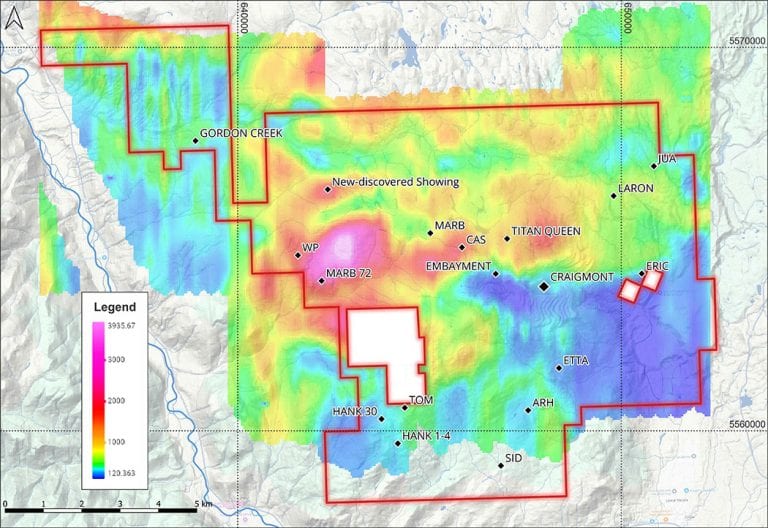
An advanced suite of geophysical surveys has unlocked significant insights into the mineral potential of the New Craigmont Project. The Magnetization Vector Inversion (MVI) model (Figure 6) highlights a significant magnetic anomaly in the MARB-CAS zone, mirroring the scale of the historical Craigmont Mine and indicating high mineralization potential. Concurrently, the Z-Axis Tipper Electromagnetic (ZTEM) survey (Figure 7) has illuminated a sizeable resistivity anomaly (not visible on the image below) north of the Craigmont Mine, which is a promising target for porphyry exploration. Induced Polarization (IP) surveys in 2017/18 and 2024 have helped generate drill targets.
Drilling Highlights from Skarn Mineralization[1]
Below are recent exploration highlights from skarn targets (Craigmont Central, No. 3 Ore Body and Embayment Zone – see photos in the drill core gallery).
- DDH-THU-002: 85.92 m @ 1.11% Cu (Embayment Zone) shown in September 7, 2016 news release.
- S-100: 116.7 m grading 0.54% Cu (resampling; Embayment Zone)[2] shown in January 23, 2017 news release.
- NC-2018-01: 71.4 m @ 0.58% Cu (Embayment Zone) shown in February 28, 2018 news release.
- NC-2018-03: 100.6 m @ 1.33% Cu (Embayment Zone) shown in April 2, 2018 news release.
- CC-18-02: 76.6 m @ 1.05% Cu (Craigmont Central) shown in April 8, 2019 news release.
- CC-19-72: 34.0 m @ 0.28% Cu and 44.0 m @ 0.45% Cu (No. 3 Ore Body) shown in July 24, 2019 news release.
- NC-24-001: 56.6 m @ 0.17% Cu and 75.0 m @ 0.36% Cu shown in Feb 20, 2024 news release.
- NC-24-002: 52.9 m @ 1.03% Cu shown in Feb 20, 2024 news release.
Collaboration with UBC’s MDRU (Mineral Deposit Research Unit)
On June 29, 2022, the company disclosed its entry into a funding agreement with the University of British Columbia (UBC) and its Mineral Deposit Research Unit (MDRU) to explore the potential and presence of copper porphyry systems. The MDRU represents a collaborative initiative between UBC’s Mineral Deposit Research Unit, Lakehead University, the Universities of Alberta and Calgary, along with 15 partner organizations, including Nicola. This partnership is dedicated to enhancing the efficiency and success rate of discovering porphyry copper deposits, leveraging combined expertise and resources to advance mineral exploration and research in this critical area.
Warren Wegener completed his Master of Science (M.Sc.) thesis on the New Craigmont copper project in February 2026. His thesis is titled The Skarn to Porphyry Transition: Establishing Links Between Skarn and Porphyry-Type Mineralization at New Craigmont, BC. The full publication and supplementary data tables are available for download on the UBC website.
The purpose of the thesis was to examine the potential connection between the historically mined Craigmont skarn and undiscovered porphyry systems in the surrounding area. Using field observations, petrography, whole-rock and mineral chemistry, and integrated geochronology, Warren’s thesis has redefined Craigmont as a porphyry-linked skarn system genetically tied to multi-pulsed Late Triassic magmatism within the Guichon Creek batholith’s Border Phase.
Mineral ages determined through geochronology lab work defined two discrete hydrothermal stages: massive calcsilicate skarn alteration at ~215 Ma related to the earliest Border Phase intrusions and overprinting, vein-hosted porphyry-type mineralization at ~209 Ma associated with later, oxidized intrusions.
Potassic, phyllic, calc-potassic, and propylitic alteration styles indicate the presence of a larger porphyry system proximal to the skarn deposit. Epidote mineral chemistry from propylitic assemblages further supports this. New Craigmont epidote contains elevated porphyry indicator trace elements consistent with other porphyry deposits in BC and worldwide. Finally, epidote mineral chemistry systematics within the Guichon Creek batholith reveal that New Craigmont contains a separate, porphyry centre, unrelated to those of the Highland Valley district. The study also highlights the importance of structural permeability and reactive Nicola Group host rocks in focusing hydrothermal fluids and controlling the distribution of skarn and porphyry-style mineralization.
Conclusions of the study have positive implications for ongoing exploration at New Craigmont. The study confirms Nicola’s ongoing hypothesis that the historical skarn is driven by a nearby porphyry system. Detailed geochemistry work has helped narrow exploration to broadly two regions within the property: West Craigmont (where the Draken target is located), and east of the historical mine (where the Jotun target is located). Nicola is integrating MRDU data into ongoing vectoring work and target generation.
Click here for our MDRU Gallery.
Learn more at:
UBC MDRU — B.C. Porphyry Project — SponsorsUBC MDRU — AboutUBC MDRU — Sponsors — AboutUBC MDRU — Membership

2025 Exploration
On February 3, 2026 the Company announced results from the 2025 diamond drilling program at New Craigmont, where Nicola drilled seven holes totaling 3,347 metres across the MARB-CAS, Draken, and WP/West Craigmont targets to support porphyry copper targeting. Drilling at Draken identified porphyry-style mineralization and alteration, including chalcopyrite and molybdenite assemblages within Guichon Border Phase diorite, suggesting proximity to a porphyry centre, which is consistent with the findings on the MDRU Master's thesis (see above). At MARB-CAS, drilling returned encouraging copper mineralization, including 9.5 metres grading 0.39% Cu, interpreted to be associated with skarn mineralization. Over 5,000 samples were selected from 10 holes drilled since 2016 across the property and analyzed on site with a portable X-Ray fluorescence (pXRF) and short-wave infrared (SWIR) to be incorporated into the Company's dataset to help identify vectors to a mineralized porphyry centre.
2024 Exploration
In 2024 Nicola carried out a 3D IP survey, and 4,874 m of diamond drilling at West Craigmont/WP, MARB-CAS and the Embayment Zone. A summary of the results and conclusions are reported in the February 20, 2025 News Release, and significant drill intervals are presented here.
2023 Exploration
On December 21, 2023, the Company announced completion of the 2023 drilling program at New Craigmont. Nicola drilled six diamond holes totaling 2,684 metres adjacent to the historic Craigmont Copper Mine. The Program aimed to explore the potential of a southeastern extension of the historic Craigmont skarn ore body and to investigate the potential of a porphyry copper system. Highlights of the program were the discovery of extensive potassic alteration, propylitic alternation, discrete zones of copper (chalcopyrite) mineralization with localized molybdenite (see photos in the drill core gallery).
References
[1] Nicola Mining Inc. News Releases. Full disclosures were made in the associated news releases referenced on this page.
[2] Pascoe, D., Husslage, M., and Ryan, C., 2018. Assessment Report #37888: “Assessment Report for 2017 Exploration, New Craigmont Project, Thule Copper Property” (Oct. 11, 2018).
History of the Craigmont Mine
The historic Craigmont Copper Mine, located 14 km from Merritt, BC, operated from 1961 to 1982. Over its operational life, the mine produced more than 36,750,000 tons of ore, which had an average grade of 1.30% copper (Cu). This resulted in approximately 900,000,000 pounds of copper being extracted through both open-pit and underground mining activities, collectively known as ‘Craigmont Central’.[3]
The Merritt Herald – March 24, 2016 – The Craigmont Mine — More than 20 years of prosperityThe Merritt Herald – May 11, 2022 – Merritt’s long history with the mining industry
During the final years of the Craigmont Mine’s operation, Craigmont Mines Ltd. undertook a limited exploration program on-site. This program was more focused on a smaller area than the one currently controlled by Nicola. It was based on the conceptual understanding that ore metals originated from the surrounding country rock. These metals were thought to have been mobilized by the heat from the Guichon batholith and subsequently concentrated in skarns formed along reef-margin facies. However, this exploration did not significantly increase the mine’s reserves. The Craigmont Mine ceased operations and was dismantled in 1982, primarily due to low copper prices, which were at $0.60 per pound at the time. Since the early 1980s, the lack of unified ownership has hindered comprehensive mineral exploration efforts on the Craigmont Mine project.
Below are the PhD theses of Dr. Norman Bell Keevil of Teck Resources Ltd. and Dr. Arthur Darryl Drummond formerly of Placer Dome Mining Corp who were the operators of the Craigmont mine at the time these were written. They form the foundation of our evolving geological interpretations of the property.
Craigmont Mines Ltd. was a very successful copper producer in south central British Columbia (10 kilometers west of Merritt, BC) over the period 1962 – 1982. Copper production was ceased in 1982 as a result of low copper prices, and the shares of Craigmont Mines Ltd. were acquired by the Craigmont Mines Joint Ventures (Craigmont Mines) in 1985. The mine grossed over $450 million in sales. Production costs included almost $112 million paid in wages to employees. Craigmont had net earnings over its two decade lifetime of $115 million and it paid shareholders $104 million in dividends. The federal and provincial governments received $74 million in direct taxes and royalties. Approximately 5,000 people were employed by Craigmont over the years.
During the period 1985 to 1992, Craigmont Mines extracted media grade magnetite for the western Canadian coal industry from stockpiles left over from Craigmont Mines Ltd. In 1993 Craigmont Mines commenced the recovery of magnetite from the mill tailings. Since the commencement of that operation, Craigmont Mines has produced in excess of 600,000 tonnes of media grade magnetite product. Approximately 450,000 tonnes of proven reserves are present in the remaining unmined tailings deposit.
(Magnetite (Fe3O4) products are used in the coal mining industry, the fertilizer industry, specialty paints, and as an abrasive in the sand blasting industry).
References
[3] “Annual Report 1982”, Craigmont Mines Ltd. (December 1, 1982).
| Regulatory | 2021 | Nicola Mining Inc. | |
| Material | 2024 | Nicola Mining Inc. | |
| Supporting | 2026 | British Columbia Geological Survey, Ministry of Energy, Mines and Petroleum Resources | |
| Supporting | 2020 | ALS Canada Ltd. | |
| Academic | 2026 | Wegener, W. | The Skarn to Porphyry Transition: Establishing Links Between Skarn and Porphyry-Type Mineralization at New Craigmont, British Columbia |
| Historical | 1966 | Drummond, A. D. | Mineralogical and Chemical Study of the Craigmont Mine, Merritt, British Columbia |
| Historical | 1965 | Keevil, N. B. |
Qualified Person
The scientific and technical disclosures included on this webpage have been reviewed and approved on April 1, 2026 by Will Whitty, P.Geo., who is the Qualified Person as defined by NI 43-101. Mr. Whitty is Vice President of Exploration for the Company.
